Back to work
Case Study Web Design UI/UX Marketplace

Twimyo

A workspace booking marketplace needed to simultaneously serve two audiences: remote professionals looking for space, and space owners looking for bookings. One design had to win both.

twimyo.com
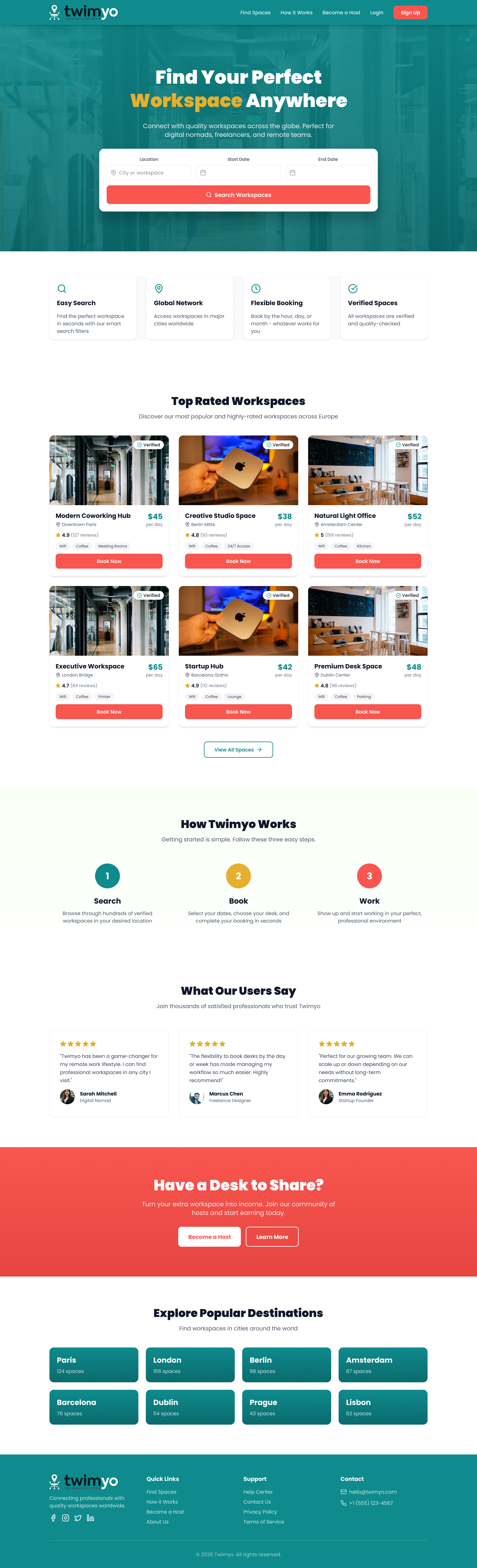
Twimyo website, desktop view

Role

Web Designer

UI Design · UX · Development

Timeline

5 Weeks

Concept through delivery

Scope

Marketplace website

Design · Build · Launch

Tools

Figma

HTML · CSS · JavaScript

The Challenge

Marketplaces are hard to launch because both sides need to see value before committing. Freelancers won't join if there aren't spaces. Space owners won't list if there aren't bookings. The homepage had to sell both simultaneously, without feeling fragmented.

The Gap

Most marketplace homepages choose a side and build for it, leaving the other half of the equation to figure it out alone. A workspace booking site that only speaks to renters loses space owners. One that leads with 'list your space' loses the demand side. Neither converts effectively.

The Brief

Design a two-sided marketplace homepage that converts both demand (professionals seeking space) and supply (space owners seeking bookings) from a single scroll, without either audience feeling overlooked.

Twimyo website full view

Research & Discovery

Competitive Analysis

I audited four workspace and flexible office players to understand how they navigate the two-sided marketplace problem: attracting both professionals who need space and hosts who supply it.

WeWork

Strong brand recognition and premium positioning. But WeWork operates company-owned spaces, not a peer-to-peer model. The supply side is internal, so the two-sided marketplace tension simply doesn't exist for them.

Regus / IWG

Enterprise-focused flexible office network with strong location coverage. The homepage leads with location search, which works for the demand side, but the brand feels transactional rather than community-driven.

Coworker.com

A directory model that lists spaces but doesn't fully own the booking experience. The design is functional but generic: search, click, contact. No trust-building for hosts and no urgency signals for renters.

Breather

Focused on short-term meeting rooms with a clean booking experience. Supply is company-controlled. Well-designed but narrow in scope: no peer-to-peer supply mechanism means hosts with underused desk space have no path in.

Criteria WeWork Regus Coworker.com Twimyo
Two-sided marketplace No No Partial Yes
Host acquisition CTA No No Partial Yes
Search-first demand UX Yes Yes Yes Yes

Design

One page. Two audiences. Zero confusion.

twimyo.com
Twimyo desktop
Twimyo mobile

Search-First Hero

The hero leads with action: a location field, start date, and end date, before any marketing copy is read. Users arrive and immediately begin the booking journey, not a reading journey.

Top-Rated Space Cards

Six curated workspace cards, each with a photo, name, location, star rating, daily price, and amenity tags (WiFi, Coffee, Meeting Rooms). Real data, real trust, real reason to click "Book Now."

Dual-Sided CTAs

The demand-side experience runs the full page. Then, a warm coral section asks: "Have a Desk to Share?," a separate CTA for hosts, cleanly separated so neither audience feels interrupted by the other's journey.

Process

How it came together

01

Two Sided Market Strategy

Mapping both user journeys before a pixel was placed. The demand side (find a space) needed to feel instant and trustworthy. The supply side (list a space) needed to feel lucrative and simple. Same page, different emotional arcs.

02

Search Architecture

Location autocomplete, date range picker, and smart filters designed to make the search feel as fast as it is. Easy Search, Global Network, Flexible Booking, and Verified Spaces as trust pillars beneath the hero.

03

Trust & Social Proof

Three user testimonials from a digital nomad, a freelance designer, and a startup founder, each representing a core segment. Popular European destinations as a trust map of where the platform operates.

04

Dual CTA Build

The host acquisition section designed with its own visual identity (coral on dark), clearly separated from the demand-side experience. A footer with full platform links, support, and contact to close the trust loop.

Results

Impact

314+

Spaces listed and displayed through the marketplace with verified amenities and transparent pricing

7

European cities in the popular destinations grid: Paris, London, Berlin, Barcelona, Dublin, Prague, Lisbon

Delivered

Completed and delivered, both sides of the marketplace activated from a single, intentional homepage

Twimyo now has a homepage that does what no generic marketplace template could, speaking directly to freelancers who need a desk today, and to the office owners who want them to find it. One page, two audiences, one clear goal: a booking made.

Next Project

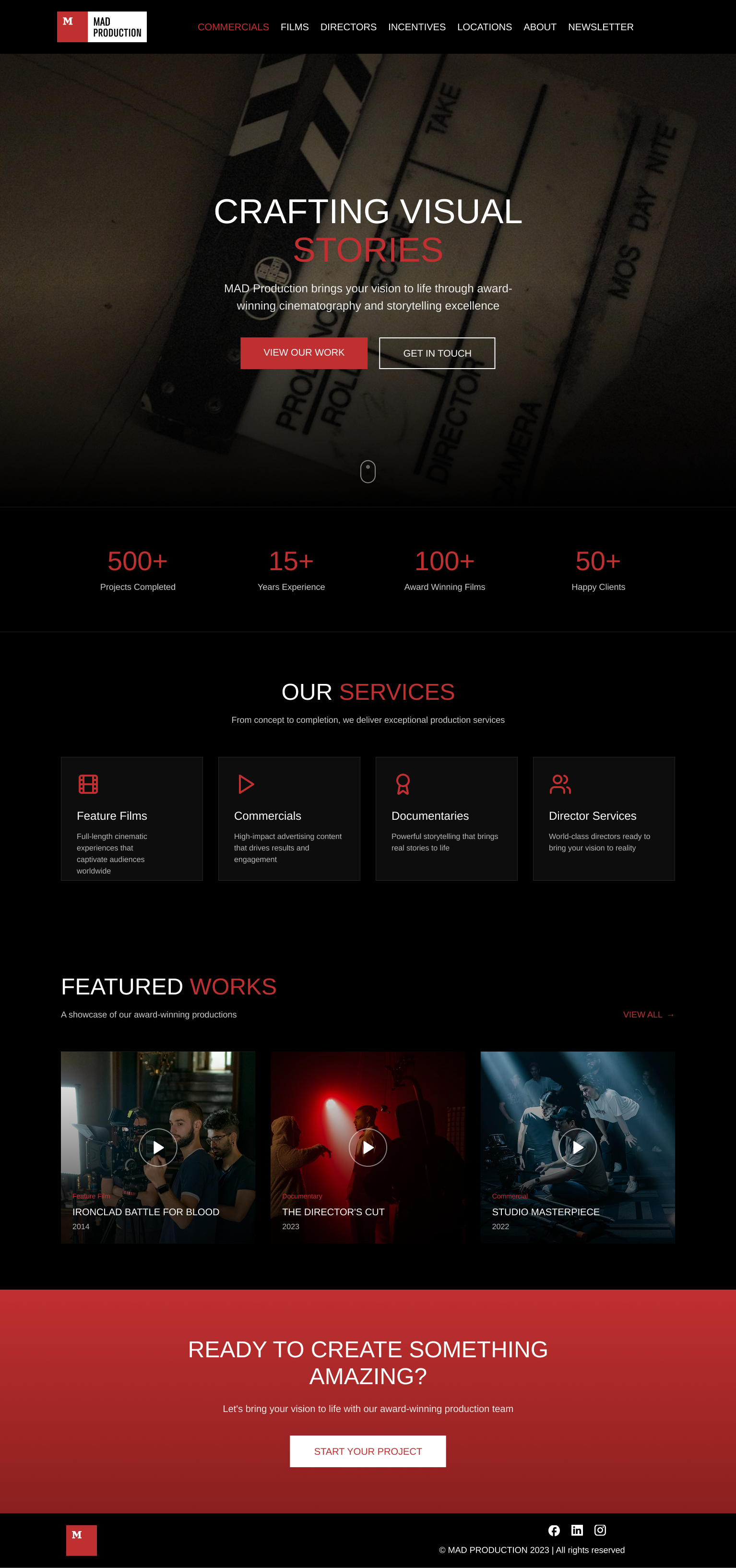
MAD Production →

Web Design · Development · Film Production